

Most sales teams don't underperform because they're unskilled. They underperform because motivation fades faster than leaders notice. A rep starts strong, momentum builds, then something shifts. Fewer calls, lower confidence, missed goals. What happens next isn't about ability. It's about energy.
Too often, motivation gets treated like a quick fix. You run a contest, adjust the comp plan, give a shoutout, and hope it sticks. But when the energy fades in a few days, the real issue shows up. Motivation isn't a mood. It's a system. And when it's built the right way, it becomes part of how the team works.
Understanding the Core of Sales Motivation
What Is Sales Team Motivation?
Sales team motivation isn't just energy. It's what keeps performance alive after the kickoff call ends. It's the internal drive and external support that help reps push through rejection, stay focused when deals stall, and keep showing up when it gets hard.
But it's often misunderstood. Motivation isn't hype. It's not a quote on the wall or a bonus at the end of the quarter. It's the structure, clarity, and feedback that help people stay connected to the work. For example, a rep who knows exactly why they're targeting a certain segment is far more motivated than one simply told to "book more meetings."
When reps understand the why behind their effort and can see the impact of their actions, performance becomes more consistent. According to Gallup, teams with high employee engagement see 21 percent higher profitability. That doesn't come from pushing harder. It comes from building a system that keeps belief alive, even when the scoreboard is quiet.
Intrinsic vs. Extrinsic Motivation
The best sales teams tap into both internal and external drivers of motivation.
- Intrinsic motivation is the inner drive - a rep's desire for growth, purpose, and mastery. It's what fuels someone to study a tough account, improve their pitch, or learn from a failed deal even when no one's watching.
- Extrinsic motivation comes from the outside - like bonuses, public praise, or the opportunity for promotion. These are visible, tangible rewards that can boost short-term effort when aligned with personal goals.
The sweet spot is when external incentives reinforce internal purpose. A comp plan that rewards coaching behavior, for example, supports a rep's deeper desire to grow and contribute.

The Foundation of Motivation Is Visibility
You can't stay motivated when you can't see the impact of your work. That's where most sales teams struggle. Not with targets or effort, but with feedback loops. In the absence of visibility, motivation dries up.
Reps need to know if their behavior is creating traction. They need fast feedback, not just on what closed, but on what moved. Small wins, like faster response times or improved demo rates, matter more than most dashboards suggest. When those moments go unnoticed, reps start questioning whether their efforts make a difference.
McKinsey found that employees who feel their work has purpose are more than four times as likely to be engaged. Yet only 15 percent of frontline workers say they feel that purpose consistently. In sales, that gap grows when the only recognition comes at the finish line. When progress becomes visible - through leaderboards, metrics, coaching, or even informal updates - reps don't just stay in motion. They stay committed.

What Motivates the Sales Team?
What motivates a sales team is different for every rep, which is why motivation breaks down the moment you build one system for everyone. There's no single source of truth when it comes to motivation. One rep thrives on recognition. Another wants mastery. A third is quietly chasing a promotion. This variability is why motivation often feels unpredictable - because leadership builds around what they think should work, instead of what actually matters to the team.
Frameworks like MOTIVE (Money, Opportunity, Teamwork, Independence, Visibility, Excellence) can help decode personal drivers. But identifying motivation is only step one. To sustain it, leaders need to build it into the system.
Motivation becomes consistent when teams:
- Set goals tied to growth, not just outcomes
- Deliver feedback that builds, not grades
- Offer autonomy within structure
- Recognize effort, not just results
- Create visibility into progress, not just the finish line
Research from Gallup shows that employees who strongly agree they can use their strengths at work every day are six times more likely to be engaged. That kind of engagement doesn't come from guesswork. It comes from understanding what truly drives each individual.

If your system only rewards one type of outcome, like closed-won revenue, and ignores the learning or behavior behind it, motivation becomes brittle. It spikes when someone is winning and disappears the moment they stall.
Understand the Psychology Behind Sales Motivation
Sales isn't just a numbers game. It's emotional work. Every rejection, every ghosted follow-up, every tough quarter chips away at motivation. And while spiffs and bonuses can create short-term lifts, they rarely build lasting drive.
The real fuel is psychological. Motivation sticks when three core needs are met:
- Autonomy - the freedom to approach work in a way that feels natural
- Mastery - the chance to grow, improve, and build confidence
- Purpose - the feeling that effort actually matters
These are the foundations of Self-Determination Theory, one of the most widely studied frameworks in motivational psychology.
According to research published in Contemporary Educational Psychology, environments that support autonomy, competence, and relatedness lead to higher motivation, performance, and well-being.

In sales, that means creating space for reps to take ownership, helping them improve through feedback, and connecting their work to a bigger picture. Motivation doesn't come from pressure. It comes from belief.
8 Ways to Boost Sales Team Motivation
Motivation isn't about a one-time campaign. It's about building the right habits, systems, and signals into everyday work. When reps feel supported, recognized, and trusted, they don't just perform. They stay engaged. These eight strategies are grounded in what actually drives sustainable sales motivation.
1. Build a Supportive Sales Environment
A supportive sales environment is the foundation that lets every other motivation tactic work. Without it, incentives spike and fade, feedback falls flat, and reps burn out faster than they develop. Sales is emotional work. Every call, every objection, every no - it adds up. And the environment reps operate in plays a major role in how they show up the next day.
Psychological safety isn't just a culture term. It's a performance layer. When reps feel safe to experiment, admit mistakes, and ask for support, they're more likely to push through setbacks. They coach each other, speak up in meetings, and take more ownership.
Culture doesn't have to be complicated. What matters is that motivation isn't only tied to output. It shows up in conversations, coaching sessions, and even small rituals - like a Monday standup, a Slack win thread, or shoutouts that acknowledge the process behind the result. Reps don't need constant hype. They need a structure that lets them recover from bad days and rebuild quickly.
2. Give Actionable Feedback That Builds Confidence
Motivation thrives on clarity. And clarity is built through feedback, not once a quarter, but every week.
Harvard Business Review research shows that regular, developmental feedback increases performance by up to 39 percent. But it only works when it's tied to behavior, not just lagging KPIs. A rep who hears "Your close rate is low" walks away discouraged. A rep who hears "Your qualification calls are skipping key pain points - let's review one together" leaves with direction.
This is where many teams miss the mark. They use feedback to grade instead of guide. But reps don't need a scorecard. They need insight - timely, specific, and actionable. When feedback becomes a normal part of the workweek, in call reviews, one-on-ones, or CRM coaching loops, reps stay motivated because they're learning. And when people feel like they're getting better, they want to keep going.
3. Set Clear and Achievable Sales Goals
To keep reps motivated, break revenue targets into behavior-driven milestones. Calls booked, demos run, follow-up velocity, so they can see the connection between today's actions and long-term results. Vague goals don't motivate. They overwhelm. "Close $1 million this quarter" sounds impressive until you're three weeks in with two stalled deals and a cold pipeline.
Break big goals into small, behavior-driven milestones: meetings booked, lead conversion rates, follow-up velocity. When reps can track what they're doing today and connect it to long-term success, motivation increases. It's not about lowering standards. It's about creating visibility between action and impact.
SMART goals (Specific, Measurable, Achievable, Relevant, and Time-bound) aren't new. But most teams still skip the part where they get granular. A system of small wins will always outperform a big number no one believes they can hit.
4. Recognize Effort in Real Time and with Impact
Sales culture has traditionally rewarded the closers - the top-line producers who crush quota. But if recognition only happens at the top of the leaderboard, it sends a message that no other effort counts.
The truth is, reps stay motivated when their effort is seen, not just the results. A strong call that doesn't convert, mentoring a teammate, picking up the slack on a deal that's stuck - these are all performance drivers. When those moments are recognized, they compound.
Research from the Journal of Personality and Social Psychology shows that immediate recognition increases engagement and motivation. And the Incentive Research Foundation found that non-cash rewards - like public praise, symbolic rewards, or experiences - often outperform monetary bonuses in perceived value.
Recognition doesn't have to be loud. But it does need to be real, specific, and timely. The moment someone feels their effort matters, they keep showing up.

5. Create Sales Compensation Plans That Motivate
Most comp plans are built with good intentions, but poor design. They're either too complicated to understand, capped at the top, or tied to thresholds that don't reflect actual effort.
A study by Misra and Nair (2011) in Marketing Science showed that removing commission caps led to an 8 percent increase in sales per rep and a 9 percent lift in company revenue. Complexity, on the other hand, led to decision fatigue and performance drag.
Quota ratcheting, where high-performing reps are punished with unrealistic targets the next year, also kills motivation. Instead of pushing harder, reps begin holding back. They stop overachieving because they know the reward won't last.
A better approach is to build in flexibility. Include multiple paths to earning, from stretch bonuses to behavior-based rewards. Provide a stable base so reps aren't in fight-or-flight mode. And above all, ensure that top performers always see a clear upside in continuing to win.
6. Give Reps Autonomy to Stay Engaged
Micromanagement is one of the fastest ways to lose a motivated rep. The best performers want space to think, test, and grow. That doesn't mean working without structure. It means being trusted within it.
The Journal of Organizational Behavior found that workplace autonomy increases job satisfaction by 43 percent and performance by 20 percent. When reps have the freedom to shape their outreach style, prioritize their schedule, or test a new sequence, they engage with the work more fully.
Autonomy signals belief. It says, "We trust you to figure this out." And when combined with coaching, visibility, and support, it becomes a powerful driver of long-term motivation.
7. Use Gamification and Real-Time Visibility to Make Progress Tangible
Sales tech should do more than record what happened. It should make progress visible while the work is still in motion -- because feedback that arrives after the quarter ends does nothing for the rep grinding through Tuesday afternoon.
Most CRMs and dashboards show lagging data. They tell managers what closed last week. They tell reps where they rank after the fact. That delay is where motivation dies quietly. When reps can't see whether their effort is creating traction in real time, they start questioning whether it matters.
Gamification solves this at the system level. When activity is scored as it happens -- calls made, demos booked, deals progressed -- reps get a feedback loop that runs faster than the sales cycle. A leaderboard that updates throughout the day doesn't just tell you who's winning. It tells every rep on the team that the work right now is being counted.
The psychology behind this is well-documented. Harvard Business School research shows that even small visual cues like progress bars and live scoring significantly increase effort and persistence. Visibility of progress is not a nice-to-have. It is a motivation mechanism.
This matters especially for middle performers, who are the reps most likely to disengage when the only recognition comes at the top of the leaderboard. A points-based system that rewards activity -- not just outcomes -- gives those reps a daily score they can actually move. That daily movement is what keeps them in the game between big wins.
For teams running manual SPIFFs on spreadsheets, the problem isn't the incentive. It's the lag. By the time the results are tallied and shared, the momentum is gone. Platforms like SalesScreen replace that manual process with real-time leaderboards, automated recognition, and live contest tracking -- so managers stop finding out about slumps after the quarter ends, and reps stop waiting until Monday to know how they're doing.
8. Foster Collaboration Within the Sales Team
Teams that build strong collaboration habits perform better and sustain motivation longer, because reps who feel connected to something bigger don't disengage the moment their personal pipeline stalls. Sales can feel isolating, especially in remote or hybrid setups. But motivation grows when reps feel part of something bigger. Collaboration builds connection, reduces burnout, and creates space for learning through shared experience. Whether it's jumping on a deal together, running peer call reviews, or solving challenges in Slack threads, collaboration reminds reps they're not alone.
According to Deloitte, high-performing teams are 2.5 times more likely to collaborate well. A strong team dynamic doesn't just lift morale. It drives better outcomes.
5 Things That Demotivate Sales Teams Most
Motivation fades when reps feel unseen, unsupported, or stuck. And it's rarely about laziness. Most demotivation stems from poor systems, unclear expectations, or environments that make it hard to care. Fixing performance starts with knowing what's getting in the way.
Common motivation killers:
- Micromanagement: Removes trust and signals a lack of belief in the rep's ability. It creates pressure without support.
- Unclear or moving targets: Reps lose energy when they don't know what success looks like or the goalposts keep shifting.
- Recognition only for top performers: When the same few names are celebrated, everyone else starts checking out.
- Delayed or vague feedback: Feedback that feels like judgment, or comes too late to help, creates anxiety and confusion.
- Quota ratcheting and capped compensation: When overachievement leads to punishment or plateaus, reps stop pushing for more.
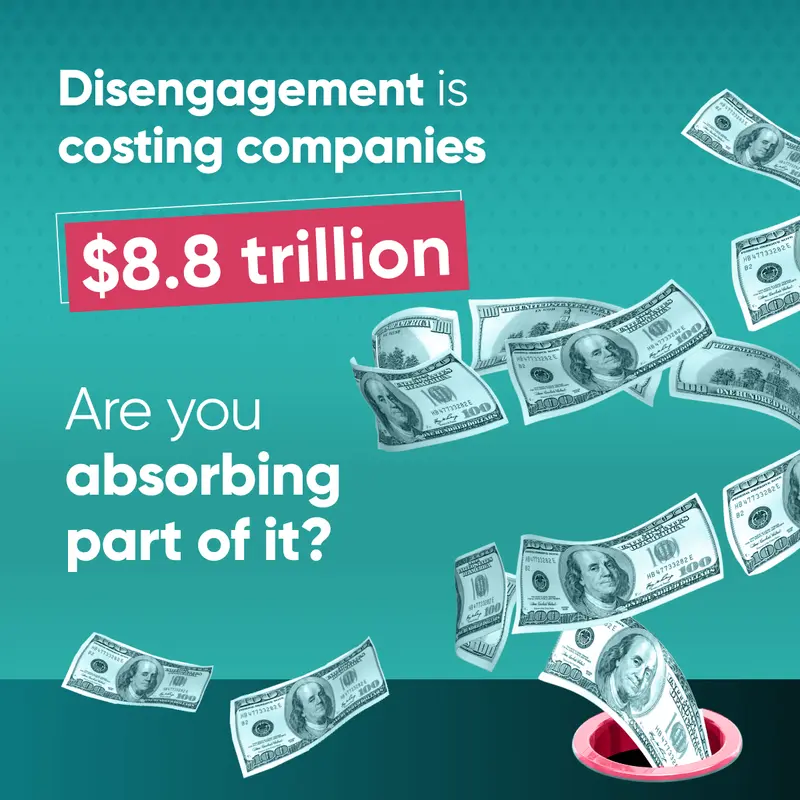
According to Gallup, low engagement costs companies up to $8.8 trillion globally in lost productivity. That's not just a culture issue. It's a business risk.
How Do You Motivate a Sales Team When Sales Are Down?
When sales are down, the right response is clarity and support, not more pressure -- because reps in a slump already know the scoreboard, and what they need is direction, not an audit. When sales are slow, pressure builds - but motivation breaks when pressure comes without support. The instinct might be to push harder, set bigger targets, or demand more activity. But what most teams need in a slump is clarity, not chaos.
Here's what helps:
- Refocus on controllable actions, not just outcomes
- Run short, winnable sprints to rebuild confidence
- Share examples of past turnarounds to restore belief
- Recognize effort, not just results
- Use coaching to unblock deals, not assign blame
Sales downturns test culture. The right response can either burn reps out or bring them together.
Build Motivation Into Everyday Sales Work
There's no magic switch. But there is a pattern that works. The teams that sustain motivation over time have one thing in common: they've built it into the structure. Goals are tied to daily behavior. Feedback comes weekly, not quarterly. Effort is recognized before the deal closes. Progress is visible before the quarter ends.
If your team has the strategy but not the system to make progress visible in real time, that's the gap worth closing first. SalesScreen gives managers a live view of rep activity, automates recognition as it happens, and runs contests without the spreadsheet overhead, so motivation doesn't depend on a manager catching the right moment. It's already built in.
Frequently Asked Questions on Sales Motivation
What motivates sales reps the most?
Sales reps are most motivated by a combination of recognition, visible progress, autonomy, and a clear sense of purpose. Money matters, but it rarely sustains motivation on its own. What keeps reps performing consistently is knowing their effort is seen -- not just the results -- and having a structure that gives them fast feedback on whether their actions are working. The specific mix varies by individual, which is why identifying personal drivers matters more than running the same incentive for everyone.
How do I keep my sales team motivated long term?
Long-term motivation requires building it into the system rather than adding it on top when performance dips. That means setting goals tied to daily behavior, not just quarterly outcomes; delivering feedback weekly, not just in performance reviews; and recognizing effort in real time rather than only at the finish line. When progress is visible and effort is acknowledged, reps don't need external bursts of energy to stay engaged. They stay connected to the work because the work gives them continuous feedback.
What role does compensation play in motivation?
Compensation is the baseline -- it has to be fair and clear before anything else can work. But beyond that, the design of the comp plan matters as much as the number. Plans that cap earnings, ratchet quotas after strong quarters, or rely on a single metric for payout create the conditions for disengagement. A well-designed plan offers multiple paths to earning, rewards both effort and outcomes, and gives top performers a clear upside for continuing to push. Complexity kills motivation faster than most managers realize.
How do you motivate your sales team when sales are down?
When sales are down, the instinct is to push harder -- more calls, bigger targets, louder urgency. That approach usually makes things worse. What actually helps is refocusing on what reps can control: the activity level, the quality of conversations, the pipeline they're building today. Run short sprints with winnable goals to rebuild confidence. Recognize effort, not just results. Use coaching sessions to unblock deals rather than assign blame. Reps in a slump need direction and belief, not more pressure.
What are common mistakes companies make when trying to motivate sales teams?
The most common mistake is treating motivation like a one-time campaign instead of an ongoing system. Related to that: over-relying on cash bonuses while ignoring recognition and autonomy; building incentives that only reward top performers while the middle of the team checks out; delaying feedback until it's too late to act on; and designing comp plans so complex that reps can't predict their own earnings. Each of these on its own drains motivation. Together, they create a culture where only the self-driven survive.